

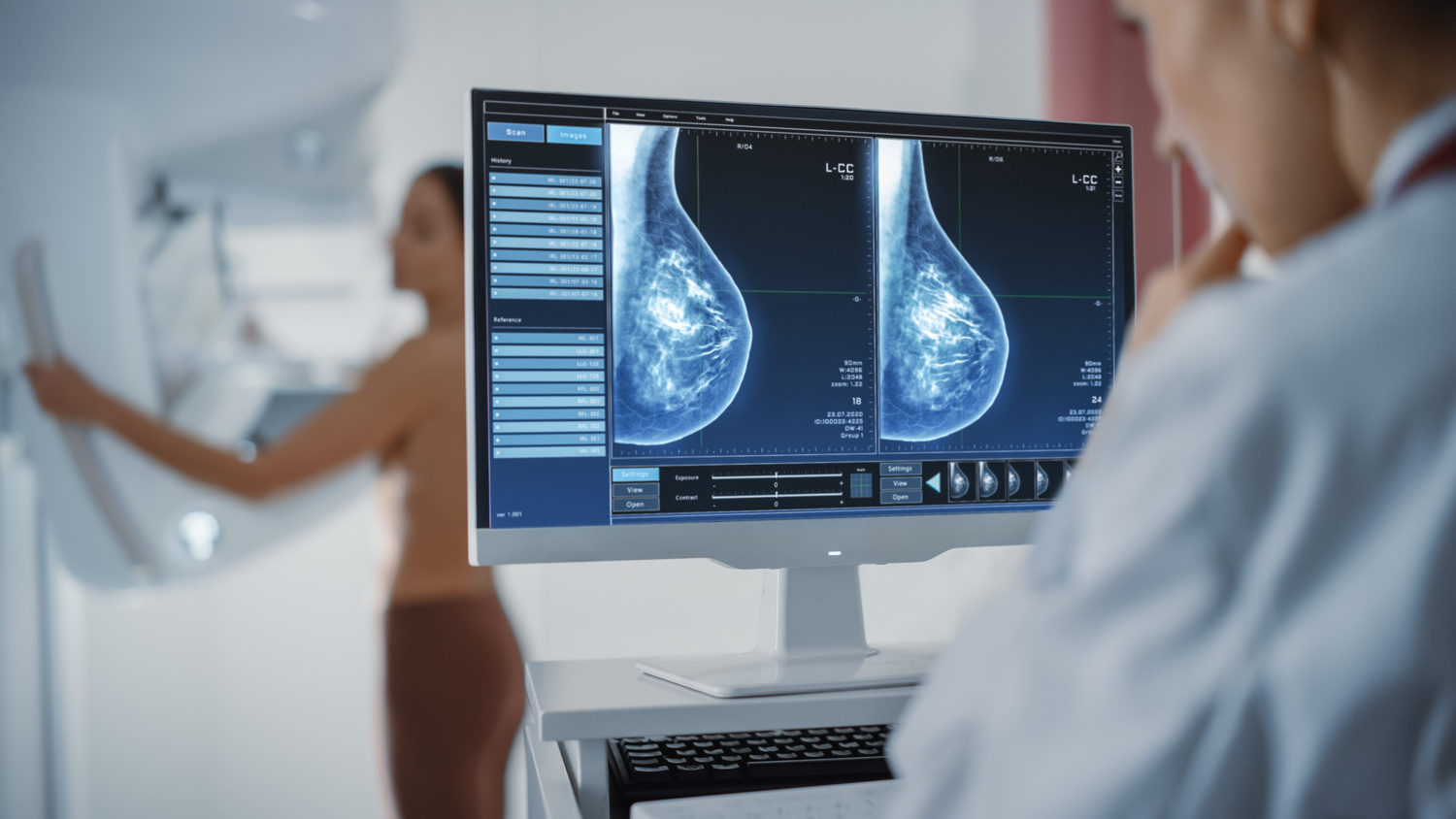
 A new resource to assist GPs with managing patients with high breast density is now available.
Since 2008 BreastScreen WA has paved the way on informing women who have a mammogram if they have high breast density, but until now there has not been clinical guidance on how best to manage these patients.
Breast density refers to the fibroglandular tissue in the breast that is seen on mammography.
Dr Emmeline Lee, director of BreastScreen WA, said this tissue is important for two reasons.
“Because the fibroglandular tissue looks white, sometimes cancers when they’re small can actually be white as well, so that can actually mask the efficiency or sensitivity of us being able to detect cancers on mammography,” she said.
“It’s also an independent risk factor for breast cancer. Women with more fibroglandular tissue are at increased risk for breast cancer compared with women who don’t have as much of the fibroglandular tissue in their breasts.”
As of earlier this year, when BreastScreen Australia published its position statement on mammographic density and screening, providing such detail to patients has become routine on a national level.
As part of this position statement BreastScreen Australia recommended women be informed in writing of their mammographic density as measured on their screening mammogram.
It also suggested patients may seek advice from their GP or breast cancer specialist regarding whether or how their breast density affects their choice of approach to breast cancer early detection, in the context of their other risk factors, personal circumstances, and preferences.
Now, new guidance for GPs released by the federal Department of Health supports doctors to talk with their patients about high breast density and potential supplemental screening.
As well as providing detail about breast density, one of the document’s key messages focuses on shared decision-making about supplemental screening.
“A woman’s decision to have supplemental screening should be fully informed and made in the context of the patient’s breast cancer risk factors, personal circumstances and preferences,” the guideline states.
“After receiving this information, a woman with high breast density may choose not to have any supplemental screening.”
RELATED: Keeping abreast of cancer care
The resource includes a flowchart to guide discussion of screening options and a breakdown of supplemental imaging options and factors to be considered.
Dr Lee said the guidelines have called for quantitative assessment of breast density, which allows radiologists to categorise a woman’s breast density.
The new resource also includes a quick overview of breast density categories as measured using the Breast Imaging Reporting and Data System (BI-RADS).
Dr Lee said not all states had been using this categorisation system, which involves four different categories of breast density.
“It’s very variable because some states actually do use BI-RADS, some don’t give density at all, and some like us give some density information,” she said.
Dr Lee said in WA women had been placed in two categories: dense or not dense. Those found to have dense breasts would have a letter sent to their GP informing them of this in order to prompt potential follow up with the patient.
She said BreastScreen WA was working on implementing the BI-RADS categorisation system in early 2026.
Breast Cancer Network Australia (BCNA) welcomed the new guidance and urged those states who had not yet implemented breast density notification to do so.
“We now need strong national promotion so GPs can easily access this guidance,” it said in a statement.
Want more news, clinicals, features and guest columns delivered straight to you? Subscribe for free to WA’s only independent magazine for medical practitioners.
Want to submit an article? Email [email protected]