

 Doctors are urged to ensure all people with asthma receive appropriate treatment as new data show asthma deaths in the country are not decreasing.
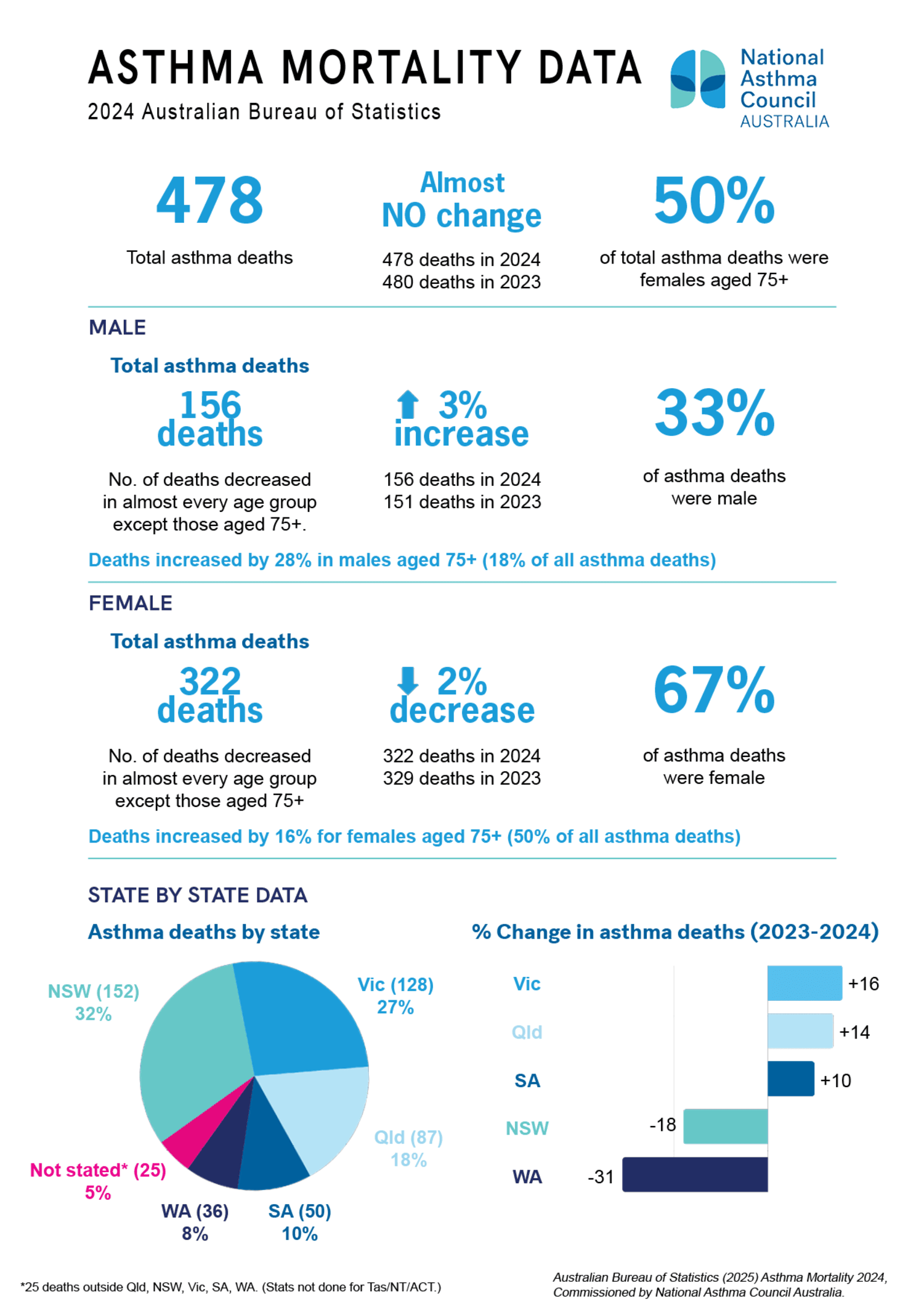
Australian Bureau of Statistica data released by the National Asthma Council (NAC) show 478 people died due to asthma in 2024, a figure that remains relatively unchanged compared to the 474 asthma deaths recorded in 2023.
In WA some 36 people died from asthma in 2024, a slight decrease from the 45 who died in 2023. The state recorded 8% of the nation’s asthma deaths.
NAC director and respiratory physician Professor Peter Wark reinforced the need for people with asthma to receive a correct diagnosis and treatment with an anti-inflammatory inhaled corticosteroid based regimen.
He said failure to properly diagnosis asthma often results in undertreatment and complacency that it is not dangerous.
“Underutilisation of inhaled corticosteroids is related to this perception and directly results in a heightened risk of severe acute asthma,” he said.
The recently updated NAC Australian Asthma Handbook guidelines now recommends that all adults and adolescents with asthma should use an anti-inflammatory reliever.
It cautions against the use of salbutamol reliever only treatment.
RELATED: New updates to the way asthma is treated
“No adult or adolescent should manage their asthma solely with a blue puffer as it doesn’t treat the cause of asthma or prevent symptoms or flare-ups and has been strongly associated with an increased risk of asthma death,” said Professor Wark.
“Rigid treatment regimens risk long periods of non-adherence to inhaled corticosteroids and are not flexible enough to control the variable nature of asthma.
“These are all risk factors for poor asthma control and potentially deadly asthma exacerbations.”
Professor Wark said a correct diagnosis should include a clear therapeutic plan using anti-inflammatory reliever budesonide-formoterol as needed, which can then escalate to regular therapy with maintenance and reliever inhaled corticosteroids and formoterol.
“These regimens allow greater flexibility and are better suited to the variable nature of symptoms and the underlying airway inflammation responsible for asthma.
“They are also more effective at reducing the risk of acute asthma and the need to use oral corticosteroids.”
The ABS data showed a decrease drop in adult deaths in those aged 35 to 65 years, however this was cancelled out by a rise in deaths of those over the age of 65 years, who represent almost 80% of people dying from asthma in Australia.
The data also revealed a much higher number of women had died from asthma – 322 women compared to 156 men. Women aged over 75 represented 50% of all asthma deaths in 2024.
“The importance of asthma management may be unrecognised in this group and can often be associated with other chronic medical conditions, possibly leading to undertreatment,” Professor Wark said.
“More work needs to be done in this area, but late-onset asthma affecting women is often driven by severe refractory inflammation that responds less well to inhaled corticosteroids.
“Those with severe type 2 airway inflammation will benefit substantially from biologic agents that improve asthma control and reduce the need to use oral corticosteroids.
“Specialist referral for those with severe asthma and poor control should be considered at any age as the treatments are so effective.”
Want more news, clinicals, features and guest columns delivered straight to you? Subscribe for free to WA’s only independent magazine for medical practitioners.
Want to submit an article? Email [email protected]