

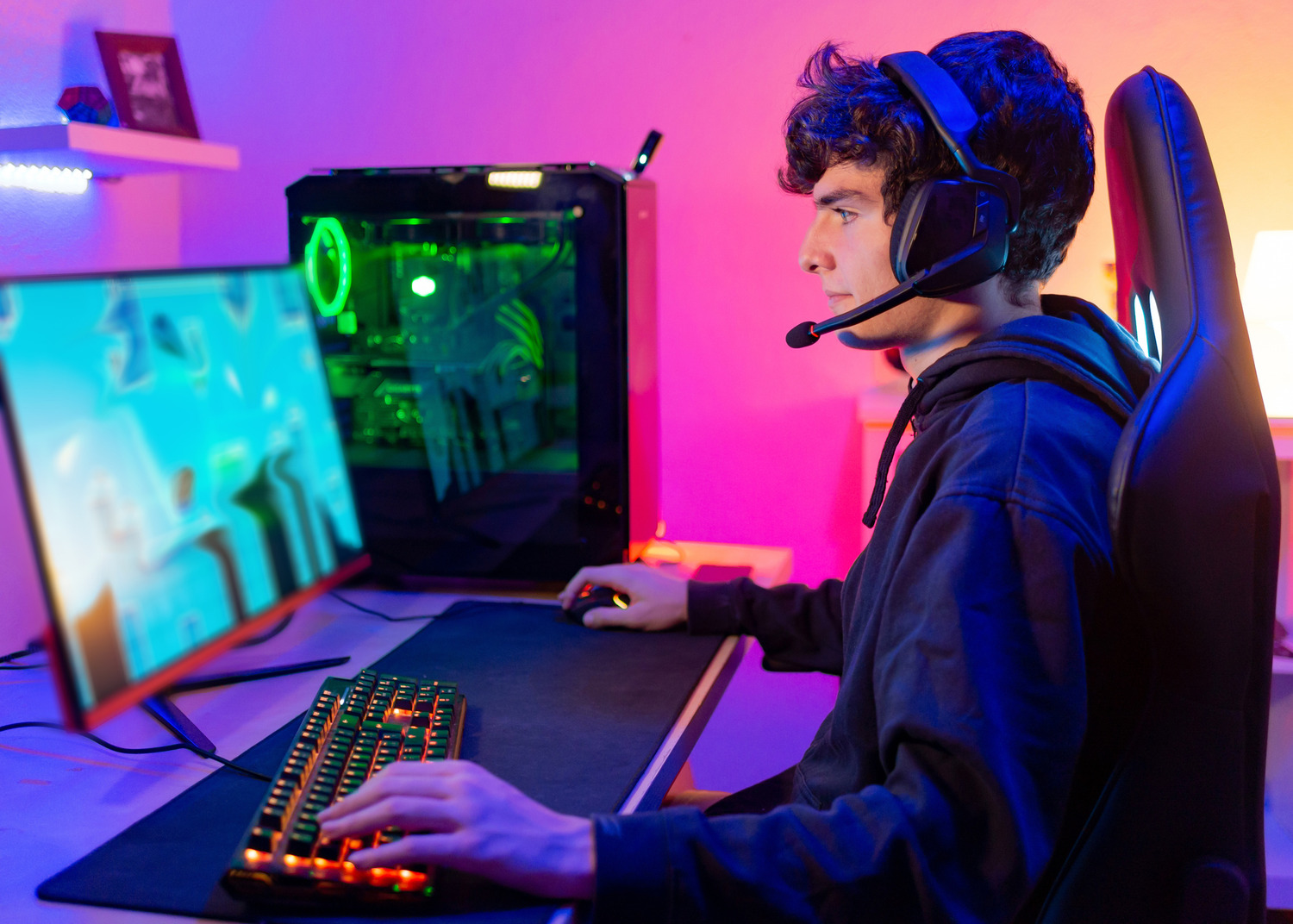
How long is too long to be playing video games? Recent research has revealed the point at which gaming becomes bad for a young person’s health.
While the Curtin University study focused on university students, a Perth GP has told Medical Forum that an increasing number of primary and high school aged children were presenting in GP clinics with issues related to excessive gaming.
The study, published in Nutrition, surveyed 317 students from five Australian universities with a median age of 20 years old. Participants were split into three groups depending on the self-reported amount of time spent playing video games.
Low gamers were those who spent zero to five hours per week gaming, moderate spent five to 10 hours, and high gamers more than 10 hours.
The team found while low and moderate gamers reported similar health outcomes, results worsened dramatically once a young person’s gaming exceeded 10 hours a week.
Professor Mario Siervo, from the Curtin School of Population Health, said the findings suggested excessive gaming was the key issue, rather than gaming itself.
“What stood out was students gaming up to 10 hours a week all looked very similar in terms of diet, sleep and body weight,” Professor Siervo said.
“The real differences emerged in those gaming more than 10 hours a week, who showed clear divergence from the rest of the sample.”
RELATED: When playing games stops being fun
The study found a decline in diet quality once gaming exceeded 10 hours per week.
Obesity was more prevalent in the high gamers group, compared to the low and moderate gamers.
High gamers had a median body mass index of 26.3kg/m2, compared to the healthy range of 22.2kg/m2 and 22.8kg/m2 for low and moderate gamers, respectively.
“Each additional hour of gaming per week was linked to a decline in diet quality, even after accounting for stress, physical activity and other lifestyle factors,” Professor Siervo said.
Gaming hours also showed a significant link to sleep disruption. All groups reported generally poor sleep quality, but moderate and high gamers scored worse than low gamers.
“This study doesn’t prove gaming causes these issues, but it shows a clear pattern that excessive gaming may be linked to an increase in health risk factors,” Professor Siervo said.
“Our data suggests low and moderate gaming is generally fine, but excessive gaming may crowd out healthy habits such as eating a balanced diet, sleeping properly and staying active.
“Because university habits often follow people into adulthood, healthier routines such as taking breaks from gaming, avoiding playing games late at night and choosing healthier snacks may help improve their overall wellbeing.”
RELATED: Delay to reforms gambling on good health
The study concluded that excessive gaming may contribute to adverse health outcomes. It recommended targeting excessive or high gaming levels and promoting healthy lifestyle habits in university.
A rise in gaming disorder and related problems in adolescents and young adults was noted during the COVID-19 pandemic, which showed up as presentations in emergency departments and youth and adult mental health and medical wards.
A gaming disorder clinic has been operating within Fiona Stanley Hospital’s Addiction Prevention and Treatment Service since 2022.
Dr Andrew Leech, director of The Garden Family Medical Clinic, said issues around health and wellbeing from gaming addiction and unhealthy social media use had become more prominent in the past 10 years.
“This reflects a fast-evolving digital landscape that healthcare providers need to engage with more actively in clinical conversations,” he said.
“While gaming and social media are now a normal part of young people’s lives, the intensity, accessibility and design of these platforms has changed significantly over the past decade, and this has clinical implications.”
Dr Leech said gaming use seems more prevalent in boys from mid-primary school through to high school.
He noted there was also a strong association between problematic gaming and young people who are neurodivergent, socially isolated, or experiencing anxiety or low mood.
“For some, gaming becomes an escape in a world that otherwise feels overwhelming or unsafe,” Dr Leech said.
He said unhealthy gaming and social media use often presented indirectly in GP clinics.
“Families rarely book an appointment specifically for gaming or social media,” Dr Leech said.
“Instead, we see sleep disturbance, irritability, emotional dysregulation, school refusal, declining academic performance, anxiety, low mood, or family conflict.”
Want more news, clinicals, features and guest columns delivered straight to you? Subscribe for free to WA’s only independent magazine for medical practitioners.
Want to submit an article? Email [email protected]