

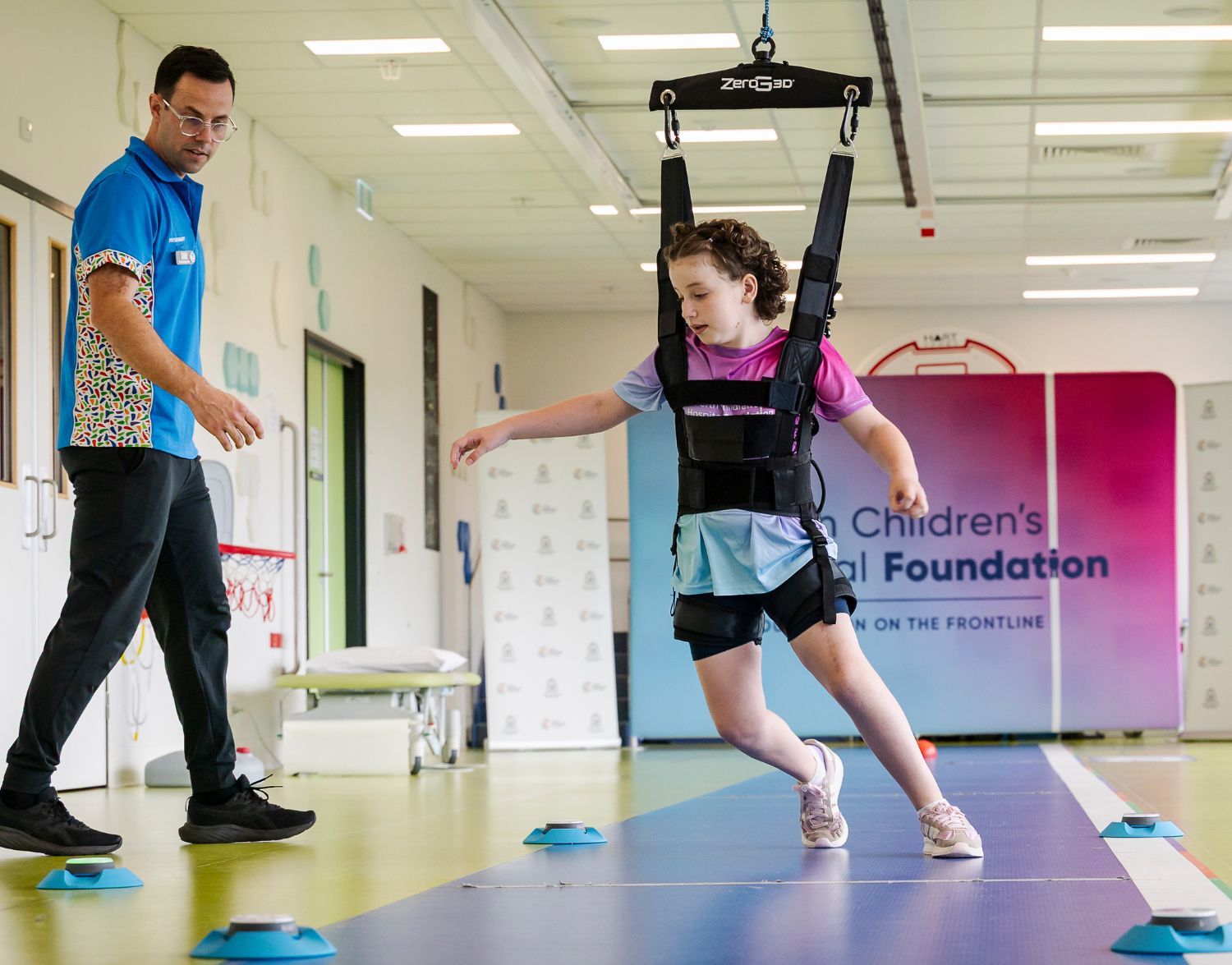
Robotic equipment is playing a vital role in helping West Australian children in their rehabilitation journey in an Australian-first.
A body-weight support system that allows children to practise everyday movements while suspended in a harness attached to a ceiling-mounted robotic track is being used within Kids Rehab WA at Perth Children’s Hospital (PCH).
The robotic rehabilitation system, ZeroG 3D, is a first of its kind for an Australian children’s hospital and has been in use at the hospital since December.
By partially supporting a child’s body weight, it reduces the effects of gravity, allowing young patients to safely practise movements such as standing, walking, squatting and lunging as they rebuild strength, coordination and confidence.
Clinicians can slowly adjust the amount of body weight supported by the harness as the child becomes stronger.
Medical Lead of Rehabilitation Technology at PCH Hedva Chiu said robotic systems allow clinicians to create a safe, precisely controlled environment where children can practise standing and walking intensively – something that is critical for driving neural recovery and long-term functional gains.
“These systems also generate valuable data that allows clinicians to track progress and outcomes, helping ensure children receive the most effective therapy possible,” she said.
Coordinator Physiotherapist of Rehabilitation Technology at PCH Dan Prigmore added: “Many of our patients are re-learning physical skills such as walking, balancing and even standing unaided. The system lets them practise these movements safely while challenging them both physically and cognitively through interactive balance programs and games.
“Integrating this technology into our rehabilitation program is a major step forward for our therapy teams and will help us deliver intensive mobility rehabilitation in new ways for children at PCH.”
The system has helped children including 10-year-old Harper Wade who had metastatic osteosarcoma, cancer in the left femur, which spread to her lungs.
She was diagnosed mid-2023 when she was eight after experiencing leg pain initially thought to be ‘growing pains’. She has now been in remission for nine months.
Eve and Rosa Sharp, four-year-old twins, have also used the system and have been taking part in rehabilitation at PCH since they were toddlers. They live with cerebral palsy which mainly affects their legs, but also has some impact on their upper body.
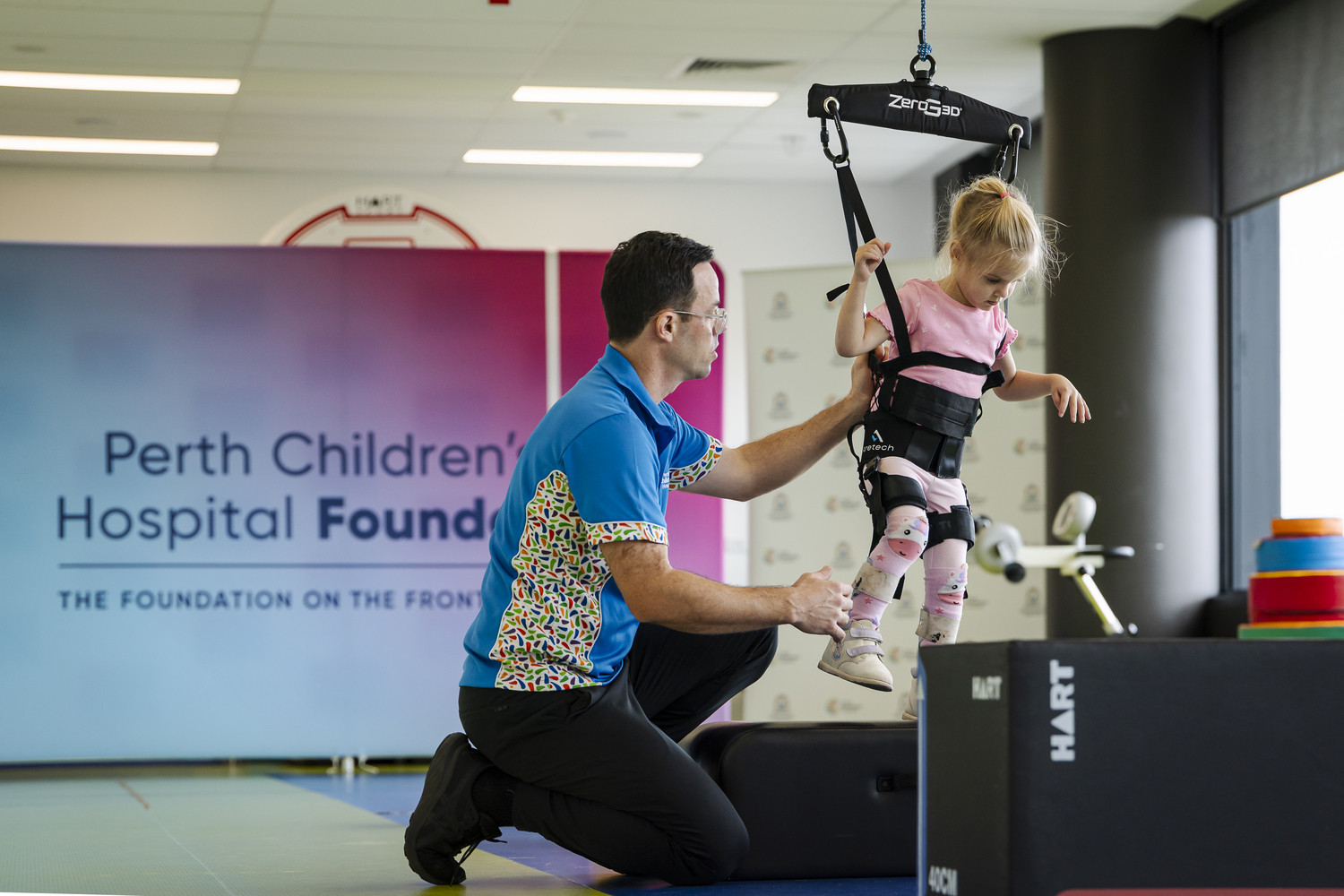
Another patient is four-year-old Luca who has spinocerebellar ataxia 29 – a non-progressive, extremely rare genetic condition. He is one of less than 50 worldwide.
Early intervention and using the robotic system at PCH has shown improvements in Luca’s ability to stand and balance and in his mobility. The team are now working towards speech and movement goals as part of his rehabilitation.
Robotic rehabilitation systems are increasingly used around the world to improve recovery outcomes by allowing patients to practise movements repeatedly and safely, while clinicians track progress using built-in data and outcome monitoring.
The ZeroG 3D can be used with children from toddlers through to adolescents and supports rehabilitation for a wide range of conditions including Cerebral Palsy, cancer, traumatic brain injuries, stroke, spinal cord injuries and other neurological or orthopaedic disorders.
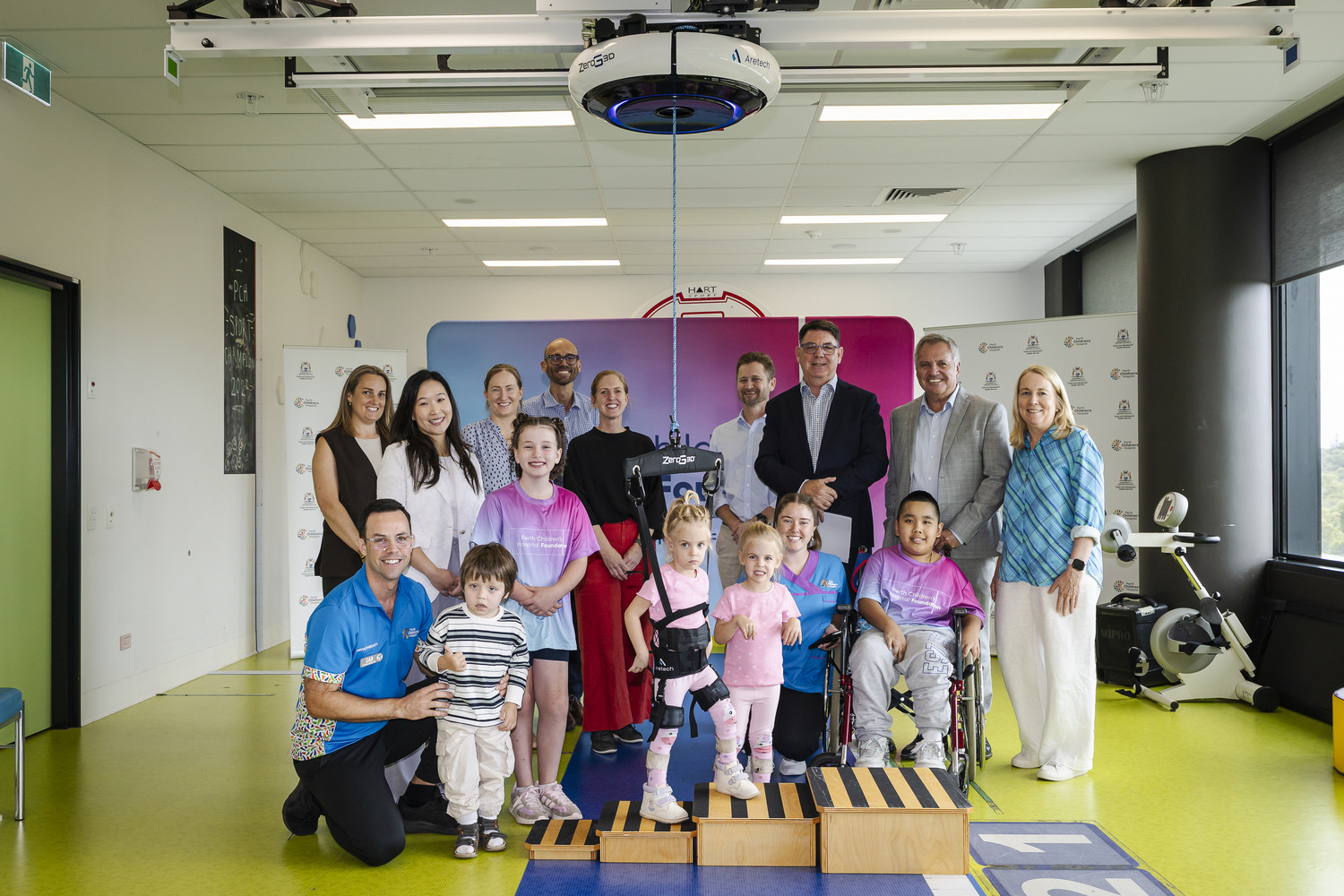
Seven clinicians at PCH have now been trained to use the technology and have begun working with the first cohort of young patients.
The system was funded through a $1.2 million investment by Perth Children’s Hospital Foundation.
The ZeroG was developed in the United States by rehabilitation engineers, who began designing the device in the early 2000s to support injured military veterans returning from conflict.
Want more news, clinicals, features and guest columns delivered straight to you? Subscribe for free to WA’s only independent magazine for medical practitioners.
Want to submit an article? Email [email protected]