

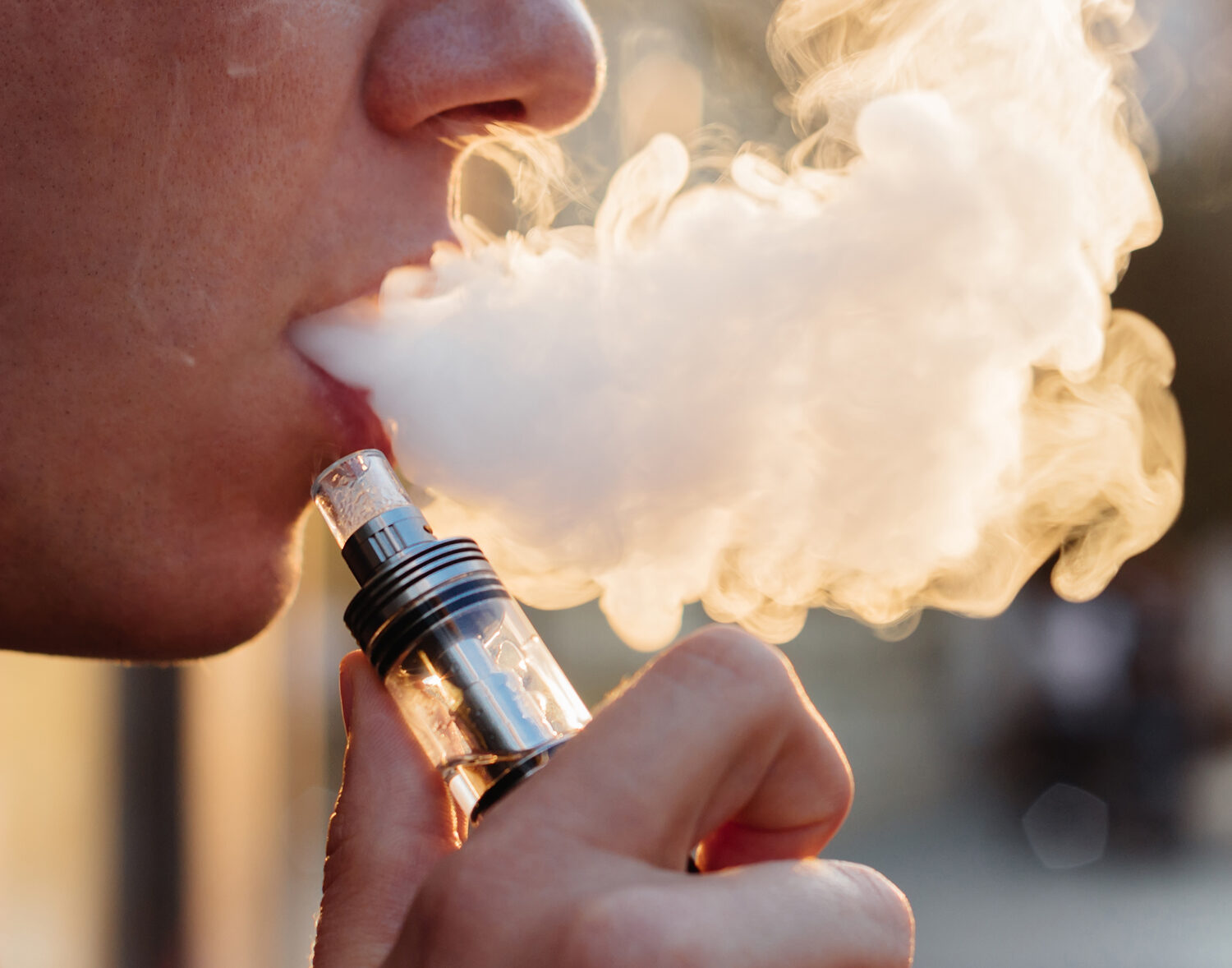
Vaping has been linked to causing certain types of cancer, according to a review of research undertaken in Australia.
The UNSW Sydney-led study found that nicotine-based vapes, or e-cigarettes, are likely to cause cancers of the lung and oral cavity.
Published in Carcinogenesis, the study analysed a wide body of global research and involved investigators from a number of Australian universities and hospitals.
UNSW cancer researcher Adjunct Professor Bernard Stewart said experts from multiple disciplines, including pharmacists, epidemiologists, thoracic surgeons and public health researchers worked together to examine evidence from different scientific perspectives.
“To our knowledge, this review is the most definitive determination that those who vape are at increased risk of cancer compared to those who don’t,” he said.
It is one of the most detailed attempts yet to determine whether vaping itself may cause cancer, independent of tobacco smoking.
While researchers have long focused on vaping as a gateway to smoking, less attention has been paid to whether the devices might cause cancer on their own.
The analysis of clinical studies, animal experiments and laboratory research examined the chemicals produced by e-cigarettes.
“Considering all the findings – from clinical monitoring, animal studies and mechanistic data – e-cigarettes are likely to cause lung cancer and oral cancer,” Prof Stewart says.
He said though the consistency of findings across those disciplines was striking, the exact number of attributable cancer cases remained unclear.
RELATED: WA’s smoking success story threatened by vapes
E-cigarettes became available in Australia around 2008 and early marketing framed them as a ‘safer’ alternative to tobacco cigarettes, as well as a possible aid for quitting smoking.
While the sale of vapes is illegal beyond the therapeutic vapes that can be sold in pharmacies to help people quit smoking, governments have struggled to keep pace with the black market sale of the devices.
Co-author UNSW Associate Professor Freddy Sitas said the evidence was remarkably consistent across fields.
“It dictated an unequivocal finding now, though human studies that estimate the risk will take decades to accumulate.”
While researchers wait for long-term population studies showing whether people who vape are more likely to develop cancer, they must rely on multiple other forms of evidence.
The team identified numerous carcinogenic compounds in e-cigarette aerosols, including volatile organic chemicals and metals released from heating coils.
They examined several types of evidence: biomarkers in people showing DNA damage, oxidative stress and tissue inflammation; experiments in mice that caused lung tumours; and laboratory studies showing cellular damage and disrupted biological pathways linked to cancer.
A/Prof Sitas said early reports that linked smoking cigarettes with tuberculosis, cardiovascular disease, stroke and lung cancer had been dismissed and overlooked and does not want the pattern repeated with vaping.
“E-cigarettes were introduced about 20 years ago. We should not wait another 80 years to decide what to do.”
Want more news, clinicals, features and guest columns delivered straight to you? Subscribe for free to WA’s only independent magazine for medical practitioners.
Want to submit an article? Email [email protected]