

 Australians are being urged to chat to doctors about vaccinations rather than look for advice online.
The AMA has launched a national social media campaign encouraging Australians to speak with their GP about vaccination.
The campaign was launched as part of World Immunisation Week from April 24-30 and amid declining immunisation rates.
The AMA said its’ ‘Have the jab chat’ campaign responded to concern about where Australians were getting their health information from and the influence it has on their decisions about vaccinations.
“When it comes to vaccination, Australians deserve advice that is qualified, personalised and confidential — they deserve a doctor,” National AMA President Dr Danielle McMullen said.
Australia’s vaccination rates have declined since the COVID‑19 pandemic, with coverage for key childhood vaccines now falling below the 95% level needed for strong community protection.
The national rate of fully immunised five-year-olds has decreased by about 2% over four years, falling from 95.22% at the end of March 2021 to 93.17% by the end of September 2025.
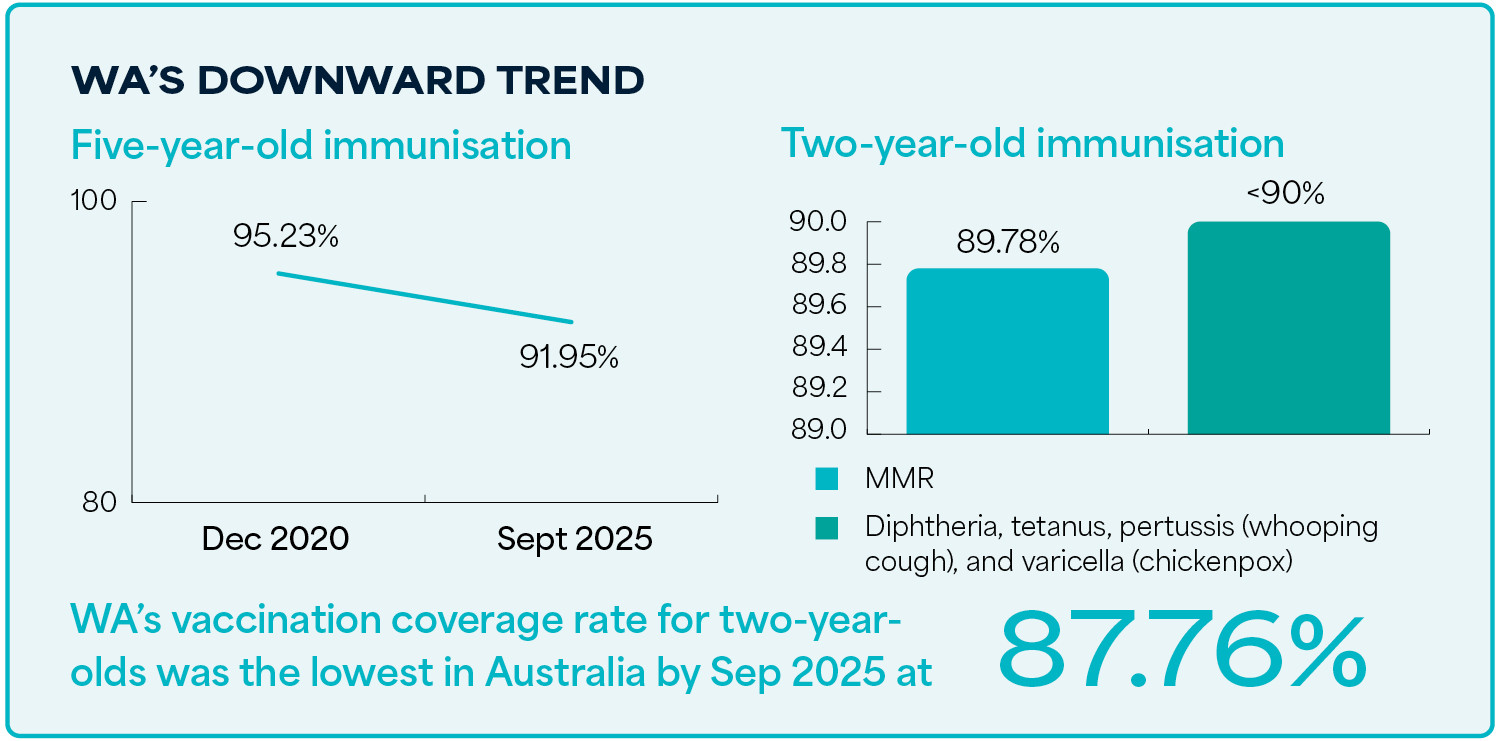
In WA, the five-year-old immunisation rate has decreased by more than 3% since 2021, down to 91.95% as of September 2025.
“Misinformation spreads faster than facts online, and increasingly sophisticated content, including deepfakes, can make unreliable information sound credible,” Dr McMullen said.
“That creates real confusion for people who are genuinely trying to make the right decision about their health.”
Dr McMullen said that while governments had expanded vaccine delivery to more healthcare professionals, access was not the core issue and this approach had not increased uptake.
“These retail pathways are largely reaching Australians who are already willing to be vaccinated, while the real decline is coming from people delaying or deferring due to uncertainty and information overload.
“That’s where general practice plays a critical role, with a strong track record of improving vaccination rates through trusted relationships and continuity of care that supports informed, confident decisions.”
RELATED: No easy cure – the drive behind vaccine hesitancy
Dr McMullen said many Australians were not rejecting vaccines but were delaying or questioning vaccination as they tried to make sense of conflicting information from different sources.
“We know many Australians are turning to AI tools and online searches for health advice,” she said.
“But those tools can’t look at your medical history, understand your personal risks, or give you the context you deserve — and they’re not always accurate or validated. AI can give you an answer, but it can’t give you your answer.
“This campaign is designed to encourage and support Australians, who feel unsure or overwhelmed, to access advice they can trust.”
Want more news, clinicals, features and guest columns delivered straight to you? Subscribe for free to WA’s only independent magazine for medical practitioners.
Want to submit an article? Email [email protected]