

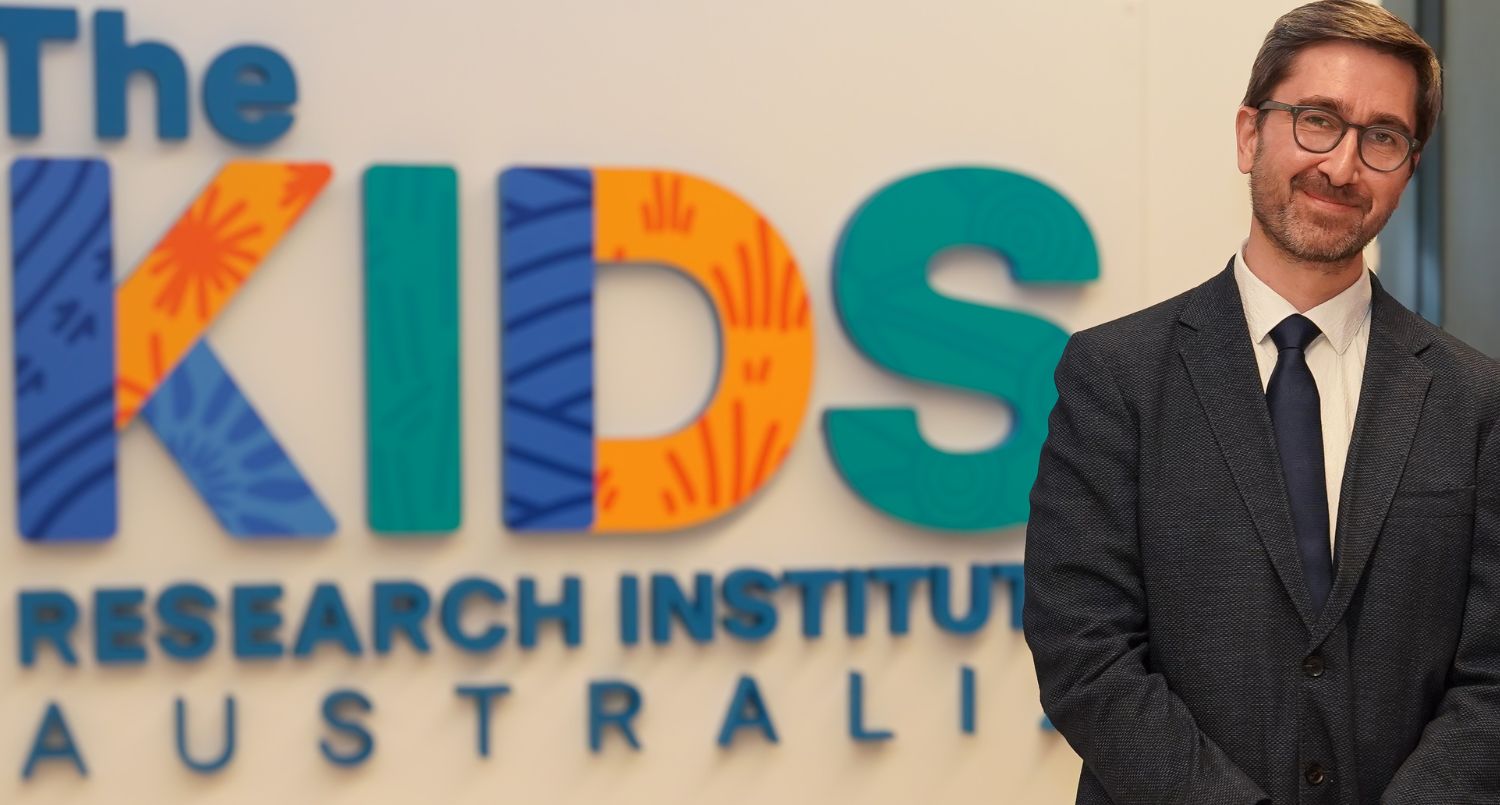
 A five-year research program to improve the accuracy and effectiveness of autism screening, diagnosis and care in Western Australia is now underway.
Led by a global leader in autism research who has relocated to Perth to carry out the work, the research is expected to help transform how children with autism are diagnosed and supported.
Stanford University Professor Mirko Uljarevic, who has taken up the 2024-25 Future Health Research and Innovation (FHRI) Fund Distinguished Fellowship, spoke to Medical Forum about his work and what he hopes can be achieved.
The clinical and data science researcher is now based at The Kids Research Institute Australia and The University of Western Australia, joining the CliniKids team at The Kids.
His program, Transforming the clinical pathway for children with autism: Using big data to improve outcomes, will apply large-scale datasets to improve clinical practice and quality of life for children with autism and their families.
Professor Uljarevic said the current assessment process, both in WA and worldwide, was far too time consuming and supports were often not catered specifically enough to individual autism profiles.
“The current paradigm is outdated and really needs to be transformed to ensure that every child and family gets the support they need,” he said.
“What we’re currently facing is an assessment process that is very time consuming, it’s complex, however at the same time, it’s quite insufficient so it leads to long waiting lists, high costs and missed opportunities.”
RELATED: The new approaches needed to autism
Professor Uljarevic said one size fits all approaches to autism were too common given the great variations between those on the spectrum.
“Kids are assigned a specific label, which is autism, and then there’s these programs that were thought would work for the majority of kids when actually they are not quite matched to their specific needs,” he said.
“So where we’re at now is that clinicians lack the critical information to guide their decision making, and that then leaves families to navigate a costly, emotionally taxing trial and error process that might entrench some of the disabilities down the path. If right supports are assigned at the right time, then the outcomes are much better.”
While diagnosis formed one aspect of where Professor Uljarevic’s work would be applied, it also goes beyond this.
“Getting a diagnosis is a first and essential step, but what’s even more important is to provide clinicians with decision support tools that can enable them to comprehensively understand the profile of each child and then be able to refer to supports that are aligned with the specific needs of a child and family.”
Fitting with Thriving Kids
Major changes to supports for children with autism or those showing signs of developmental delay are expected to be rolled out across the country in October as part of the Thriving Kids program. While the program was initiated by the federal government, it will be delivered on a state level within community-based settings.
Professor Uljarevic said the program, set to replace NDIS supports for children under nine with mild to moderate support needs, has some intersections with what he hopes to achieve with his own research in terms of the need to understand each child’s strengths and needs.
While he said Thriving Kids seemed like a positive change, we would have to wait and see what it looks like in practice.
“To help all this work, we really need to bring the focus back to evidence based supports that help kids in the community as much as possible.”
RELATED: The state of play on Thriving Kids and the role of GPs
Originally from Serbia, Professor Uljarevic has spent time living in the UK and in Melbourne. He has come from his last role at Stanford University in the United States.
“One of the things that did draw me to take up the current position was that ability to eventuate policy change through research,” he told Medical Forum.
“I think WA in particular, it’s quite a unique setting where The Kids and CliniKids have had a lot of success using research to impact policy to change some aspects of clinical practice.
“I’ve been doing research for more than 10 years across different settings and you can do good research everywhere, but I think the ability to then see the next step for your research, which in this case the ultimate point is to help families, I do believe that hopefully we’ll be able to achieve that here.”
Professor Uljarevic did not think his work would result in more diagnoses of autism, but better understandings of people’s individual profiles of autism.
Want more news, clinicals, features and guest columns delivered straight to you? Subscribe for free to WA’s only independent magazine for medical practitioners.
Want to submit an article? Email [email protected]