

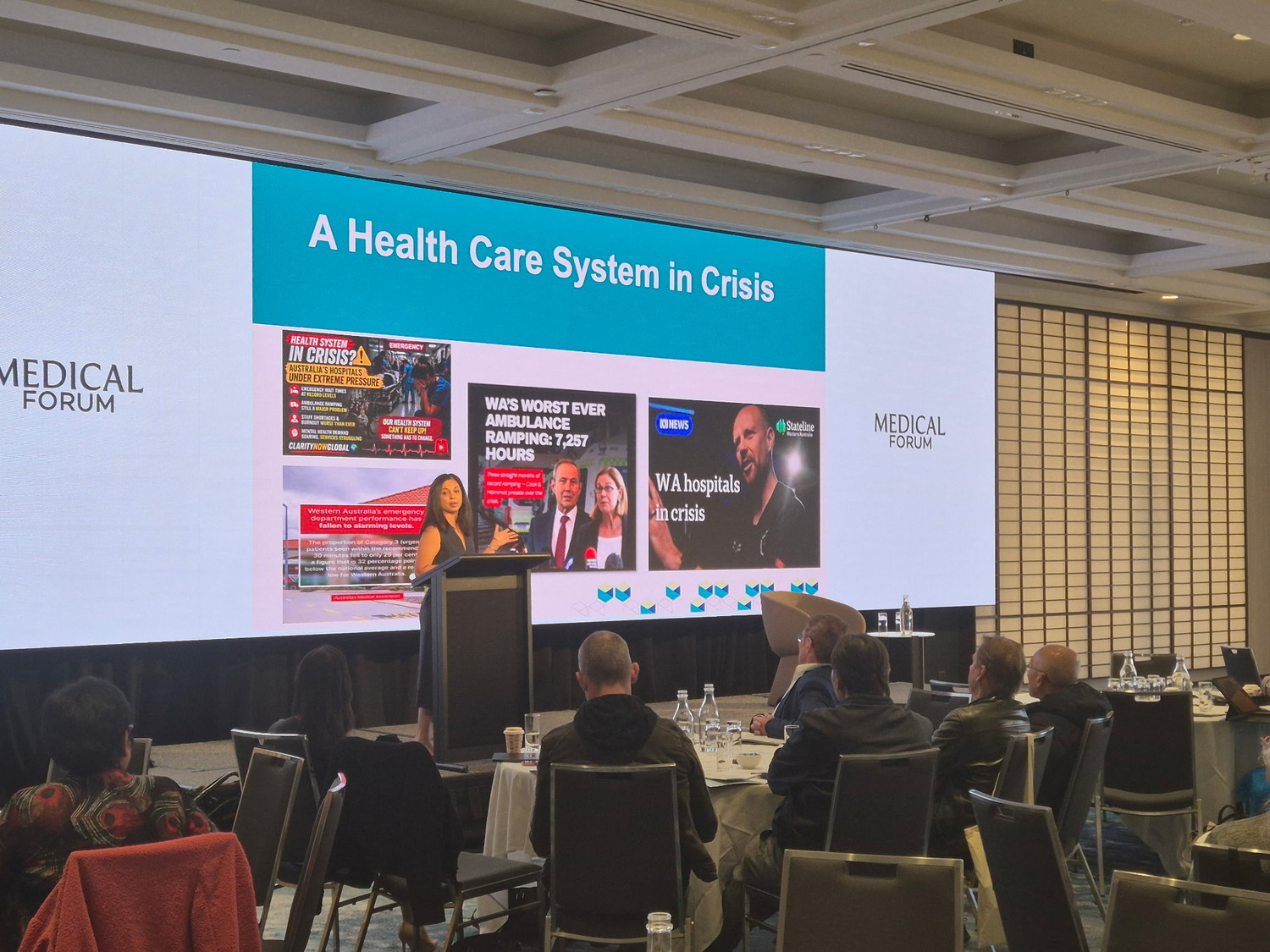
 Patients are waiting longer in emergency departments as care becomes more complex, the population grows and the health system struggles to keep up.
But time and stress can be saved if the right call is made before a patient is sent to ED – and that is quite literally a phone call, says Fiona Stanley Hospital emergency physician Dr Tracey Bhar.
Speaking at Medical Forum Live on May 9 her talk ‘From door to disposition: patient pathways in the emergency department’ was a reminder that all doctors – GPs and hospital specialists – are doing their best in an under-pressure system facing high demand and a shortage of beds.
She said the system has become “complex and convoluted”, the hospital and ambulance system are under huge pressure, and things are “just getting worse”.
“No one is coming in to see a GP with a single problem anymore, people are coming in with a shopping list of issues,” she said.
There are difficulties on both sides; patients are sent to the ED when they shouldn’t be which adds to the wait times and patient frustration, but there can also be a lack of communication back to primary care, such as discharge notes, Dr Bhar acknowledged.
So how can GPs help make the best of an under-pressure system? While they can’t find more hospital beds, they can make a simple phone call to refer the patient to the right place.
Dr Bhar shared some of her personal experience in the ED to highlight the issue.
RELATED: What an ED consultant wants GPs to know about referring to emergency
Sharing a picture of her triage screen from the morning of May 5, some patients had been waiting up to 88 hours in the ED.
“These elderly patients are sitting there waiting for beds for days,” Dr Bhar said.
“I can go home, have dinner with my family, have a good night’s sleep and come back the next day and they are still there. I never thought I’d be doing continuity of care in the ED, but I’m doing continuity of care now.”
A patient case study
Dr Bhar told the story of Ben, a 45-year-old man who had been sent to ED after experiencing headaches for weeks. The headaches had been getting worse, paracetamol and ibuprofen were not working, and his coordination and vision were becoming impacted.
His GP had “done all the right things” ordering different blood tests and a CT. The CT had shown a new mass on his brain and Ben was sent straight to ED to see a neurologist.
There was just one problem, Fiona Stanley Hospital doesn’t have a neurologist, Dr Bhar said.
Ben spent six hours waiting to see a doctor only to be told he was in the wrong place.
Dr Bhar’s biggest tip to GPs is to call the ED ahead of referring the patient to double check it is the right hospital to send them to with the right specialities available.
“The system is still quite segmented. Ideally all hospitals would have all of the specialities, but we just don’t,” she said.
“So, if your patient is unwell and needs to go to the ED today, pick up the phone and give us a call. We will be able to say ‘yes, that call is right, but it’s not that hospital’.
“It doesn’t fix the system, but for that patient you may have saved them hours of waiting and stress.
“It saves them being told at the end of the day ‘I’m so sorry you have a mass on your brain, but we can’t help you here.’
“If you can make a patient’s journey through the ED less stressful you have done your job for the day and I’ve done my job for the day.”
Want more news, clinicals, features and guest columns delivered straight to you? Subscribe for free to WA’s only independent magazine for medical practitioners.
Want to submit an article? Email [email protected]